

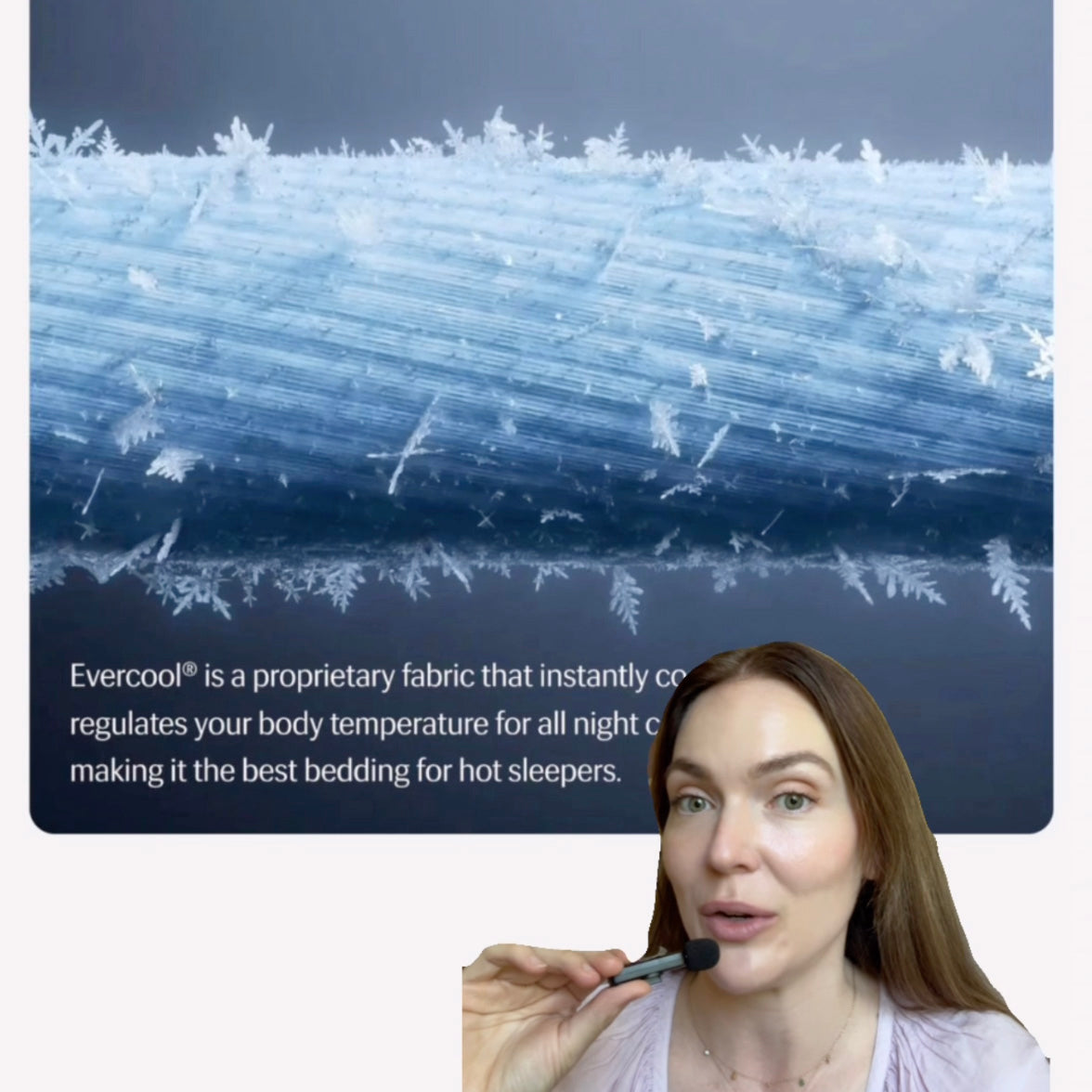
The Truth About Cooling Fabrics
Every summer seems to bring a new generation of cooling sheets, cooling blankets, and cooling pajamas, each promising a more comfortable night's sleep. The language is compelling. Products are described as instant cooling, cool to the touch, or engineered to dissipate heat, often accompanied by sleek imagery and proprietary technologies. It's easy to assume they're all solving the same problem.
But they're not.
The word cooling has become a catch-all for a range of very different textile technologies, many of which are designed to create an immediate sensation rather than support comfort throughout an entire night of sleep. That distinction matters because while the first few moments in bed are memorable, they represent only a tiny fraction of the seven or eight hours your body spends regulating its temperature as you move through different stages of sleep.
Cooling Isn't the Same as Temperature Regulation
A fabric that feels cool against your skin when you first lie down isn't necessarily the fabric that will keep you most comfortable until morning.
One way to think about it is the difference between stepping barefoot onto a marble floor and walking onto a wool rug. The marble immediately feels cool because it rapidly draws heat away from your skin. It's a real physical phenomenon, but it's temporary. Once the surface begins to warm, that sensation changes. Many cooling textiles are designed to create a similarly refreshing first impression, and for some people that may be exactly what they're looking for.
Comfort over the course of an entire night, however, depends on something more dynamic. As we sleep, our bodies are constantly adjusting. Core temperature naturally falls as we drift off, fluctuates throughout different sleep stages, and rises again toward morning. We also release moisture continuously, even when we don't notice it. The fabrics surrounding us become part of that process, influencing how efficiently heat and moisture move away from the body.
This is where temperature regulation enters the conversation. Rather than trying to make you feel cold, temperature-regulating fibers are designed to help maintain a comfortable microclimate next to your skin as conditions change throughout the night. Instead of relying on an initial cooling sensation, they work continuously by managing moisture, allowing airflow, and adapting to changes in temperature.

Why Merino Works Differently
Merino wool is a remarkable example of this. Long before it became a performance textile, it evolved to help sheep remain comfortable across dramatic shifts in weather, from cool mornings to hot afternoons. Its exceptionally fine fibers can absorb moisture vapor before your skin ever feels damp, then gradually release that moisture back into the air, helping reduce the clammy feeling that often disrupts sleep. Rather than fighting your body's natural thermoregulation, merino works alongside it.
This is one of the reasons merino has become such a trusted material not only for mountaineers and endurance athletes, but increasingly for bedding and sleepwear. The performance isn't based on a chemical finish or a temporary surface effect. It's built into the fiber itself.
Look Beyond the Marketing
That doesn't mean every synthetic cooling fabric is ineffective, nor does it mean every natural fiber performs the same way. Different materials excel in different applications, and there are situations where a cool-to-the-touch fabric may be exactly what someone wants. The important point is understanding what a product is actually designed to do.
Marketing language often emphasizes the experience you'll have in the first few seconds after climbing into bed. Fiber content tells a much more complete story about how a fabric is likely to behave over the next eight hours.
The next time you're shopping for cooling bedding, turn the package over before making a decision. Look beyond the front label and read the fiber composition. Understanding what a fabric is made from—and how those fibers naturally behave—will often tell you far more than the marketing claims on the front.
At AU Baby, we've always believed that the materials surrounding us deserve the same thoughtfulness we give to the food we eat or the skincare we use. We chose merino not because it chases the latest trend, but because nature has already spent thousands of years perfecting a fiber that helps the body find balance. For us, better sleep has never been about creating a colder bed. It's about creating an environment that works in harmony with the body, allowing it to do what it was designed to do.
Watch the Full Explanation
Prefer video? Watch the full breakdown of cooling fabrics and why temperature regulation matters more than an initial cooling sensation.
Comments